

Community-led care for Western Sydney's little stars
Spotlight on
16 March 2026
Penrith-based organisation Narang Bir-rong Aboriginal Corporation is a place where family comes first, in their work and workplace.
The team provides early support to families with Aboriginal and Torres Strait Islander children, offering practical resources and culturally safe care aimed at maintaining children within their homes and communities.
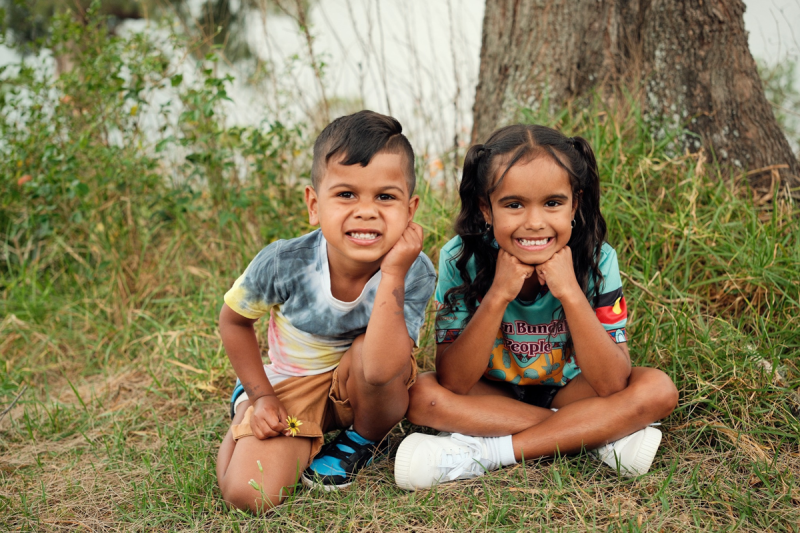
Keeping little stars shining bright by maintaining connections to culture, community, and kinship
Narang Bir-rong delivers programs that promote the wellbeing of children in out‑of‑home care, ensuring carers and children are equipped to remain strong in their cultural identity and spiritual wellbeing. Completing its comprehensive, wrap‑around support model, the organisation also offers aftercare services to young people transitioning out of out‑of‑home care.
Narang Bir-rong means ‘little stars’ in Dharug language. The team believes in the bright futures of Aboriginal and Torres Strait Islander children, supporting them to stay strong through connections to community, family, culture and Country. In this challenging environment, the team remains dedicated to their work, having grown rapidly with a 30% increase in staff over the past 2 years.
Aiesha Pettit‑Young, a manager at Narang Bir‑rong who has been with the organisation for roughly 2 years, attributes the organisation’s stability throughout this period of rapid growth to a strong family focus. ‘We refer to ourselves as the Narang Bir‑rong family,’ she says. ‘It’s not really like a caseworker–client relationship. We’re a family, and the kids know that.’
Proactive care at every stage
Being Aboriginal-led has been key to the organisation’s ability to build trust and strong relationships with staff and the wider community.
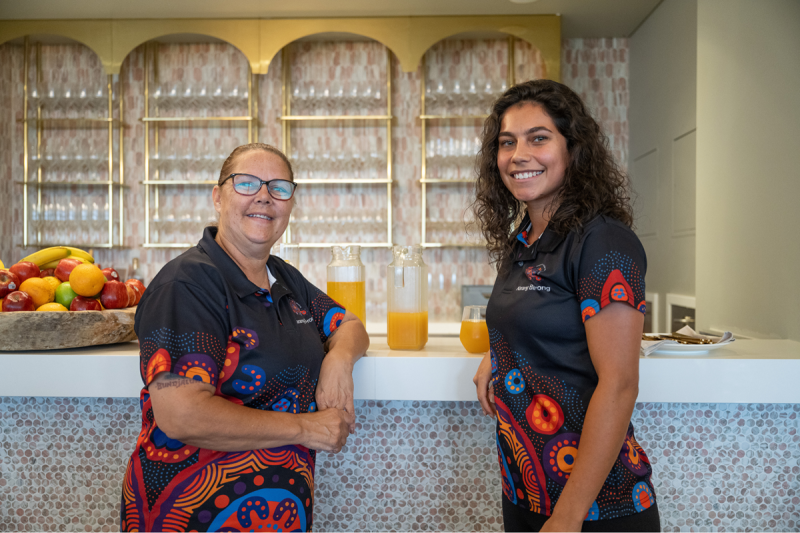
Narang Bir-rong has over 88% Aboriginal and/or Torres Strait Islander employees
‘Community knows community best. Incorporating has allowed us to really practise Aboriginal governance and work in ways that truly reflect community,’ says Aiesha.
The organisation reported that 2025 was a ‘significant success in keeping children safe and strengthening families’:
- Narang Bir-rong staff did 4,322 home visits.
- More than 150 children were supported to remain safely at home.
- 54 families reached a point where they were assessed as no longer at risk by the Department of Communities and Justice (DCJ).
Keeping the little stars shining
‘Our slogan is “keeping our little stars shining”. It’s about maintaining our kids’ connection to culture, family, kinship and identity – all of it together,’ Aiesha says.
This purpose is embedded across Narang Bir-rong’s 8 programs, which provide end-to-end care and services for children, their families, and foster carers.
‘The aim of our organisation is really just to be there for the kids – to make sure their identities are strong, their connections are strong, and that they’re proud of being Aboriginal and Torres Strait Islander and of their background,’ Aiesha says.
She adds that supporting children and young people to meet their social, emotional and behavioural needs is part of a bigger picture.
‘We don’t want what happened with the Stolen Generations to keep happening. We don’t want kids growing up disconnected from who they are, having to find that information on their own without the tools or support.’
A foundation of cultural connection
One of the key ways Narang Bir‑rong distinguishes itself from mainstream organisations in the sector is through a strong emphasis on wrap‑around cultural care. This approach ensures that children’s needs are supported beyond physical health and safety, recognising the importance of identity, belonging and culture. These principles underpin programs such as Cultural Connections.
‘Our Cultural Connections program works with Aboriginal children in foster care to research their family history – finding their mob, their language, their totems – and developing a personalised cultural care plan for each child.’
The program achieves this through extensive family‑finding, consultation with family members and carers, and the development of cultural goals that ensure each child has meaningful opportunities to learn about and engage with their culture, supported by their wider community.
The Cultural Connections team delivers annual cultural camps, after‑school hubs, and activities, including cultural cooking, painting, and dancing. In 2025, children involved in the program formed a traditional dance group and performed at the Penrith NAIDOC event.

Jarjums creating art at a cultural camp
Narang Bir‑rong also supports carers through this program. A focus of this work is building the capacity of non‑Indigenous foster carers to provide culturally responsive care and deepen their understanding of Aboriginal and Torres Strait Islander perspectives.
‘Even if children are placed with non‑Indigenous foster carers, they still maintain a strong sense of identity, belonging and connection to culture,’ Aiesha says.
Support for families at all stages
Narang Bir-rong believes that prevention is the best action. Alongside its programs to support children in out-of-home care, it supports strong families and keeping children at home.
‘The family preservation program is early intervention. We work with families alongside DCJ to prevent children going into care,’ explains Aiesha.
This program supports families in practical ways, including case management, structured home visits, referrals, parenting programs, brokerage funding, and connections to other community services. Families receive assistance with everyday routines and household tasks, like cleaning and furnishing homes. Plus, the program supports parents in meeting their children’s needs, including attending medical appointments and ensuring school attendance.
As well as the early intervention support, Narang Bir-rong’s Leaving Care Program makes sure the young people who leave out-of-home care at 18 have a safety net as well.
‘The aftercare program helps with cooking classes, housing, jobs, resumes, furniture – everything they need to become independent adults,’ Aiesha explains.
‘Even after they age out of care, they know they’re not on their own. They still have that relationship with us and know they can come back if they need support.’
Family-based model – inside and out
From their offices in Penrith and St Peters, the team at Narang Bir-rong is proud of the family-based model of care it provides to the community.
‘The kids call us Aunty and Uncle. I’m only 23 and I get called Aunty by the little ones,’ says Aiesha. ‘It’s amazing! We’re forming a community around the kids, not just providing a service.’
Being Aboriginal-led has been key to building trust and strong relationships for Narang Bir-rong. With this foundation, the organisation has been able to expand quickly and deliver outcomes for the community.
‘We walk into homes with no judgement, because we see ourselves, our families, our own lived experiences.
‘Life experience is just as powerful as qualifications. Our experience as Aboriginal people is what allows us to create real change. We have the power to break cycles and end intergenerational trauma ourselves.’