

Ikuntji Artists: From Country to runway
Spotlight on
26 May 2026
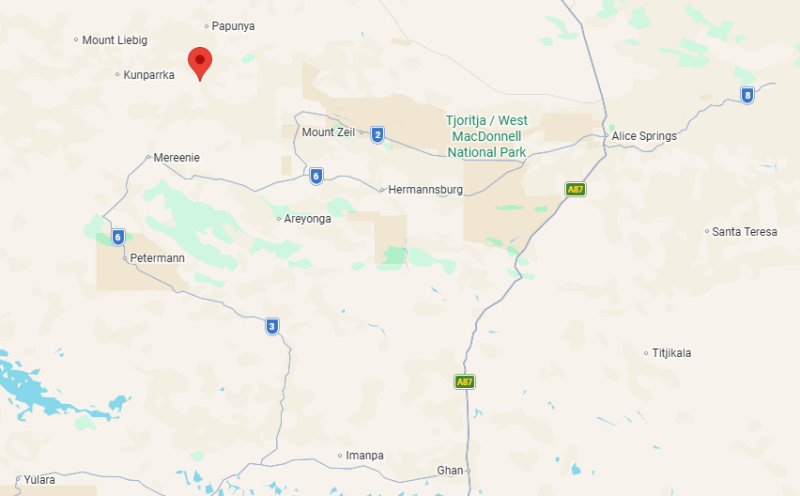
In 2023, a small Aboriginal art centre from the remote Western Desert appeared on the Australian Fashion Week runway for the first time. The community of Haasts Bluff sits more than 200 km west of Alice Springs – and yet its artists, their designs carrying Tjukurrpa and deep connection to Country, had made it to one of Australia’s most watched fashion stages.
For Roseranna Larry, Chairperson of Ikuntji Artists Aboriginal Corporation, it was a moment that carried the weight of more than three decades of history.
‘Wearing Ikuntji designs makes me feel proud. It keeps alive the strong history that my grandmother started,’ says Roseranna.
A women-led beginning
That history begins in 1992, when women gathered to paint and screen print at a community hub as part of an adult education program. Esther Jugadai, then council president, was instrumental in establishing the women’s centre that would become Ikuntji Artists. At the time, men dominated the mainstream painting movement in the region. This was different – women-led, built around what the community actually needed, and quietly advancing something bigger: recognition, independence, and a space that belonged to them.
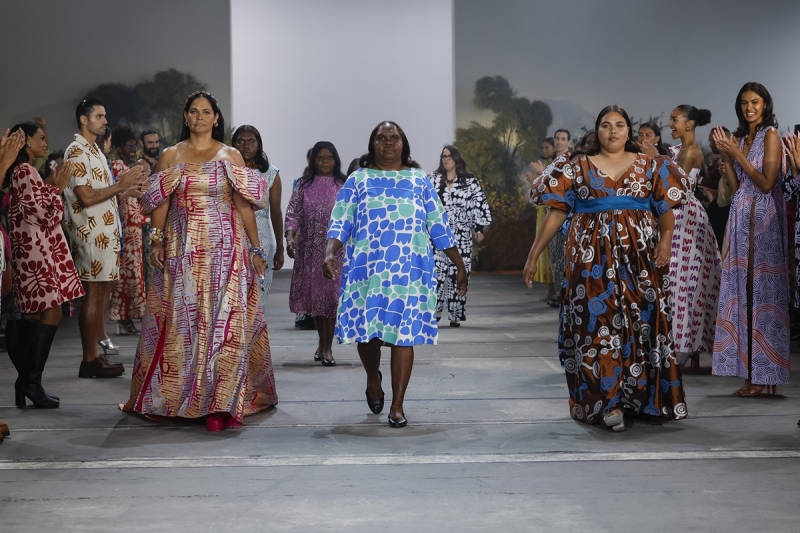
Ikuntji artists at Australian Fashion Week
The influence travelled beyond Haasts Bluff. Women from Ikuntji have a long history of reaching out across the Western Desert, supporting other communities to establish their own ways of working in the arts.
Running on their own terms
For its first years, Ikuntji operated under council control. Income didn’t flow directly back to the community, and the art centre had little say over its own direction.
In 2005, that changed. Ikuntji Artists incorporated as its own organisation – no longer ‘the women’s centre’ under the council structure, but a community-owned corporation setting its own vision, controlling its own finances, and governed by a board of local artists representing around 100 members.
Community decides what matters, what comes next, and how the outside world engages. Being Aboriginal-owned means having a real say – not just economically, but as a cultural organisation, about what people want and how culture is led.
From T-shirts to textiles
The screen-printed T-shirts that started it all in 1992 never really went away. In 2016, a $5,000 grant gave the art centre a chance to build on that tradition more deliberately, taking bold designs rooted in Tjukurrpa and Country, and moving them into a new form.
Working with the Batchelor Institute, artists and art centre workers learnt to create repeat patterns, sew, and finish garments. The community documented the whole process in the book Ikuntji Textiles – because the knowledge of what it takes to create fashion from Country and culture was worth recording.
From that small beginning, Ikuntji has become a leader in Indigenous fashion among art centres in Australia. Last year, that work was formalised with the launch of its own label, Ikuntji Designs.
Staying in control
As the label grows, manufacturing is outsourced to keep pace with demand. But the decisions – and the intellectual property – stay on Country. Members carefully consider every partnership, making sure artists and culture are protected.
‘Whoever we work with, the key non-negotiable is that all copyright and Indigenous cultural IP stay with the artists,’ says Dr Chrischona Schmidt, who has managed Ikuntji Artists since 2012.
People across Australia now spot Ikuntji designs on the street. For Chrischona, the impact goes well beyond the commercial.
‘You can’t really put a financial value on what it means for artists to wear their own designs on that runway. It’s about confidence, pride, storytelling, and the ripple effect that still continues in the community and beyond.’
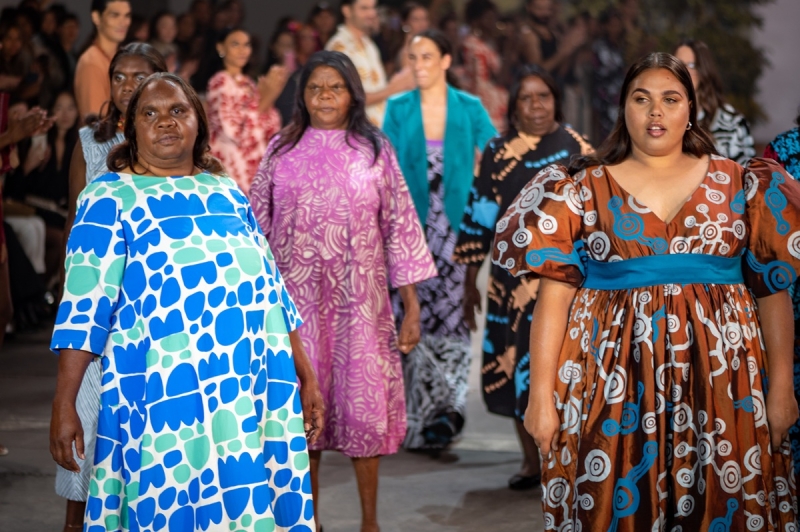
Ikuntji artists at Australian Fashion Week
And for Roseranna, whose grandmother helped build this more than 30 years ago, that ripple is deeply personal.
From a women’s centre under a remote community council to the Australian Fashion Week runway – the distance Ikuntji has travelled is more than geographical.